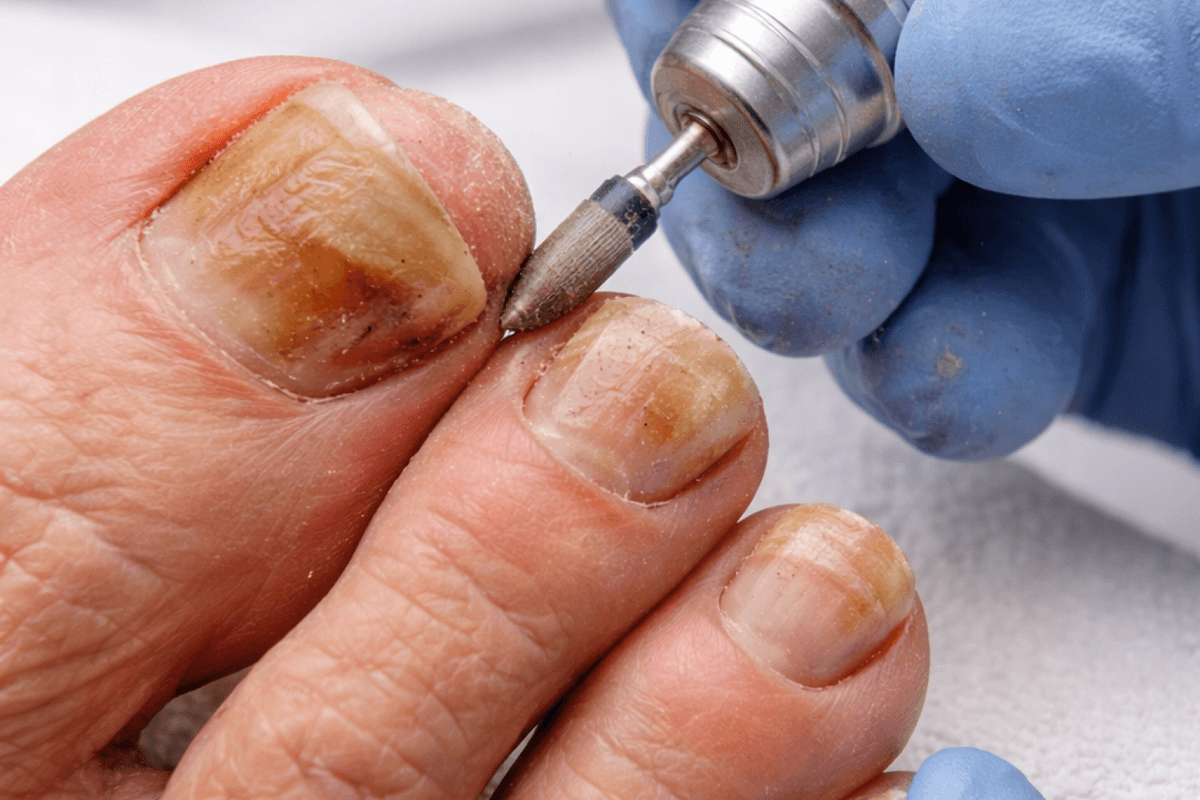
Why thick toenails need proper treatment
Thick toenails are common, especially in older adults and in people with long-term nail trauma, fungal nail changes, circulation issues or difficulty reaching their feet.
When nails become very thick, they can press on shoes, cause pain and become hard to manage safely at home.
- Pain or pressure in shoes
- Difficulty trimming nails safely
- Nails that are curved, brittle, or crumbly
- Reduced mobility or difficulty reaching the feet
- Concerns about skin injury, bleeding, or infection
How treatment works during a home visit
After checking the nails, skin and circulation, we use podiatry tools to reduce the nail thickness and improve comfort.
Portable drills and instruments let us file thick nails down in a controlled way, smooth rough edges and make them easier to manage between visits.
- Assessment of the nail, skin, and circulation
- Careful trimming and reduction of thickened nail plate
- Use of domiciliary drills to gently debulk the nail
- Smoothing sharp or rough edges
- Advice on ongoing care and when to book again
Is the treatment similar to a clinic appointment?
Yes. For routine thick toenail care, treatment is much the same as it would be in clinic. The main difference is that we bring the equipment to you.
For many people, a home visit is easier than organising transport or getting to a clinic.
- Professional podiatry instruments brought to your home
- Clinical assessment before treatment begins
- Care tailored to your comfort, mobility, and medical history
- Clear explanation of what is being done and why
When extra care or referral may be needed
Some thick nails are linked to fungal infection, repeated trauma or marked nail deformity such as gryphotic nails. In these cases, ongoing treatment may be better than a once-off trim.
If there are signs of infection, skin breakdown, significant pain, or concerns related to circulation or diabetes, extra care or referral may be needed.
- Very curved or gryphotic nails
- Suspected fungal nail changes
- Painful pressure on adjacent toes or skin
- Redness, swelling, or signs of infection
- High-risk foot concerns such as diabetes or poor circulation
Who home treatment is especially helpful for
Home visits are particularly helpful for people who cannot safely manage nail care on their own or who find clinic visits difficult.
They also make things easier for family members and carers organising support.
- Older adults living at home
- People with reduced mobility or balance concerns
- NDIS participants and Support at Home clients
- People recovering from illness or surgery
- Family members organising care for a loved one